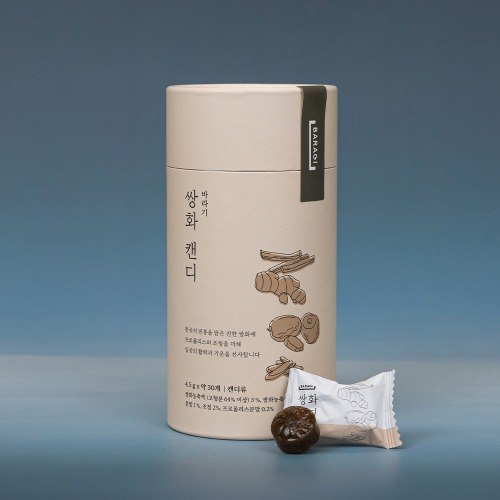
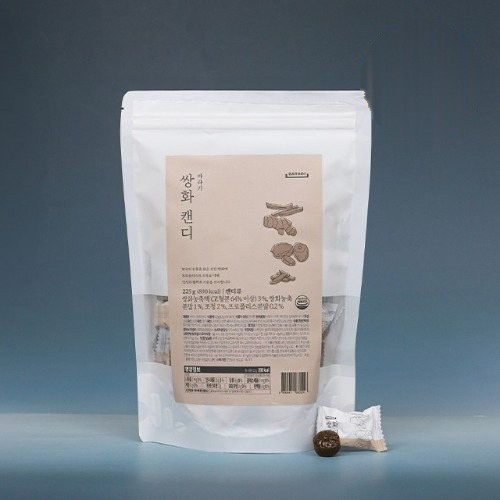
Ssanghwa Candy
Ssanghwa is what Koreans drink when winter arrives. Peony root and processed rehmannia, in a candy.
| Specification | 4.5 g × 30 · 135 g (tube) |
|---|---|
| Produced by | Hanyang Confectionery |
| Line | Candy |
| Ingredients / allergens | Cane sugar, malt syrup, ssanghwa concentrate [white peony root (Korea), cnidium (Korea), Korean angelica (Korea), astragalus (Korea), prepared rehmannia] 3%, rice syrup (jocheong), ssanghwa concentrate powder 1%, propolis powder, L-menthol |
| Shelf life / storage | Printed on the base of the pack. Room temperature. |
| Regulatory class | Candy (Korean food category) · destination classification to be confirmed |
| Halal status | Preparation in progress. Not halal-certified. |
| Carton / pallet / HS code | Carton, pallet, barcode and HS code on request |
| Label languages | Confirm by product and destination |
| Product feature | Ssanghwa, peony root and processed rehmannia. Contains propolis. |
Trade terms, MOQ and lead time on request. We reply within one working day.
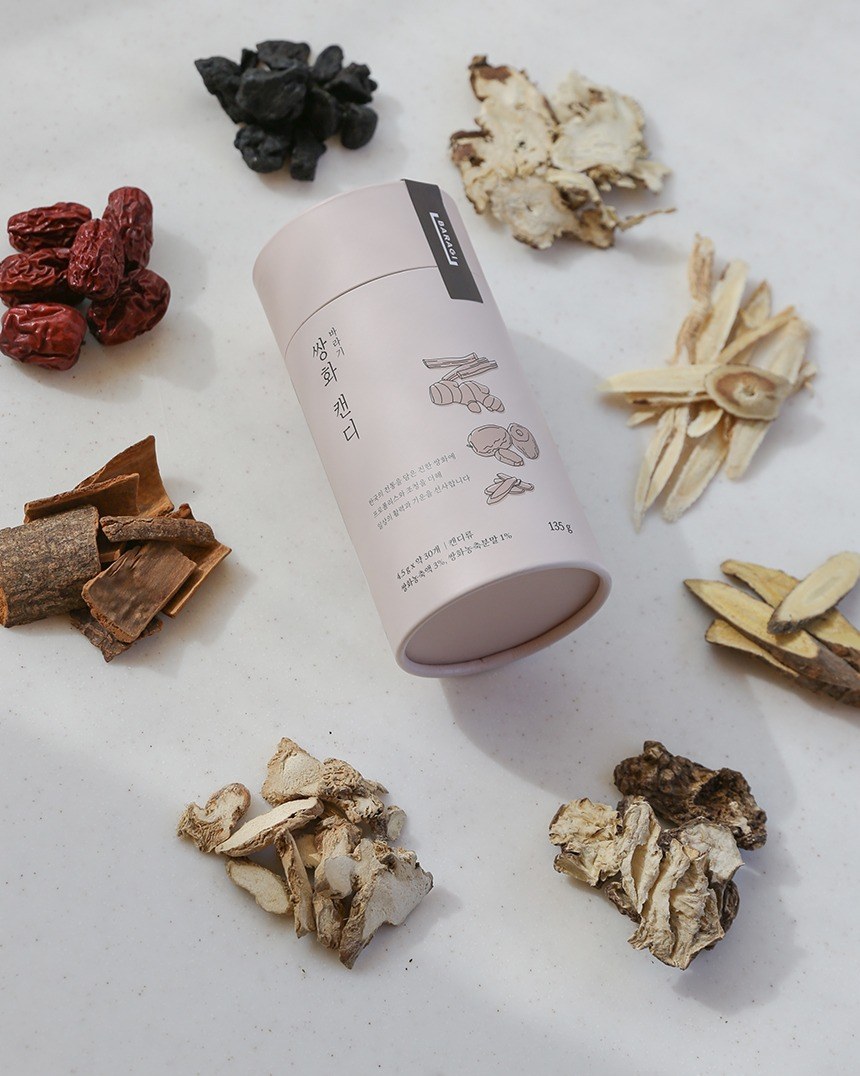
Key ingredients
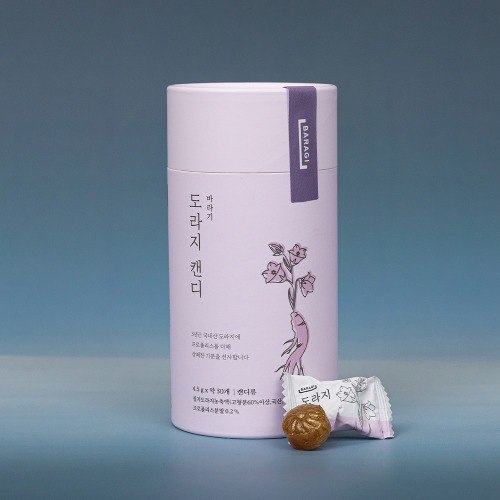
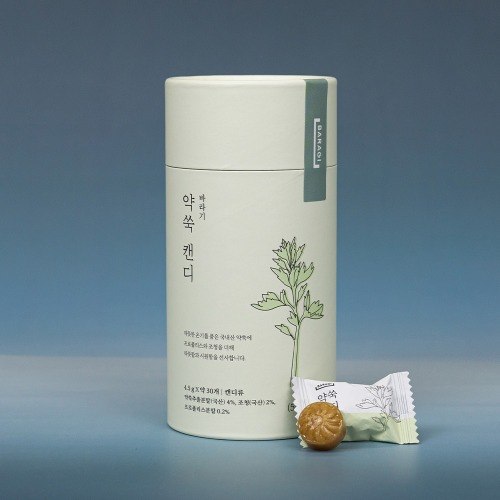
Five of the nine traditional ssanghwa herbs go into the 3% concentrate, the rest into a 1% concentrate powder — the same 4%-total approach as the bellflower and mugwort candies.
- White peony rootKorea
- CnidiumKorea
- Korean angelicaKorea
- AstragalusKorea
- Prepared rehmannia
- Ssanghwa concentrate powder (ginger, jujube, cinnamon, liquorice and others)
- Propolis powderAustralia
The blend, and how it is used
Ssanghwa is the traditional blend of nine herbs — white peony, prepared rehmannia, astragalus, cnidium, angelica, ginger, jujube, cinnamon and liquorice — taken as a decoction. All nine are included; leaving one out would not be a traditional ssanghwa.
As with the bellflower and mugwort candies, a 65 Brix ssanghwa concentrate is made using the same steep-and-reduce process.
The only sweetness comes from cane sugar and rice syrup, not refined sugar. Propolis is added for a clean finish. Herbal pharmacists trained at Kyung Hee University formulate it; Hanyang Confectionery makes it in a HACCP certified facility.
A food for everyday consumption. It makes no health claims.
When to reach for it
- When you enjoy ssanghwa tea but don't want to brew it
- In a stuffy room with little fresh air
- When you want a hard candy without refined sugar
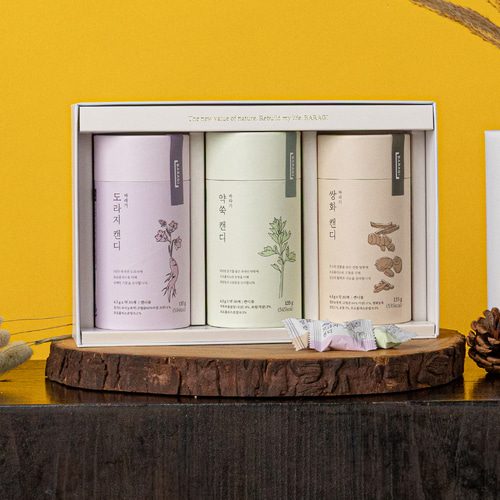
- When you want a different flavour from the bellflower or mugwort candy
How to enjoy it
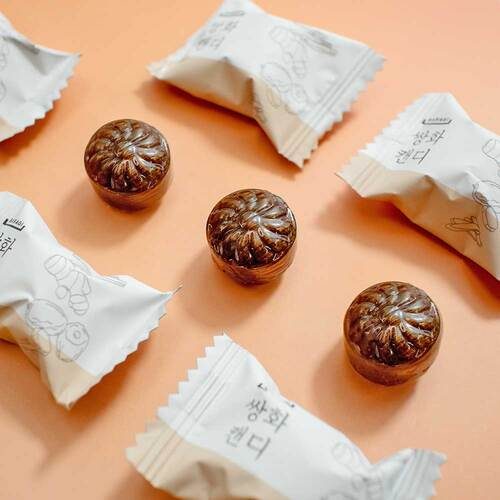
Dissolve in the mouth without water. Let it melt slowly rather than swallowing whole, to avoid choking.
Dissolved in hot water, it can be taken like a cup of ssanghwa tea.
Sensitive to moisture and heat — reseal the remainder and keep it somewhere cool.
Nutrition
Per 10 g · 135 g per tube (535 kcal)
| Sodium | 1 mg |
|---|---|
| Carbohydrate | 10 g |
| Sugars | 8 g |
| Cholesterol | 0 mg |
| Fat | 0 g |
| Protein | 0 g |
Ingredients as labelled
Cane sugar, malt syrup, ssanghwa concentrate [white peony root (Korea), cnidium (Korea), Korean angelica (Korea), astragalus (Korea), prepared rehmannia] 3%, rice syrup (jocheong), ssanghwa concentrate powder 1%, propolis powder, L-menthol
Packaging
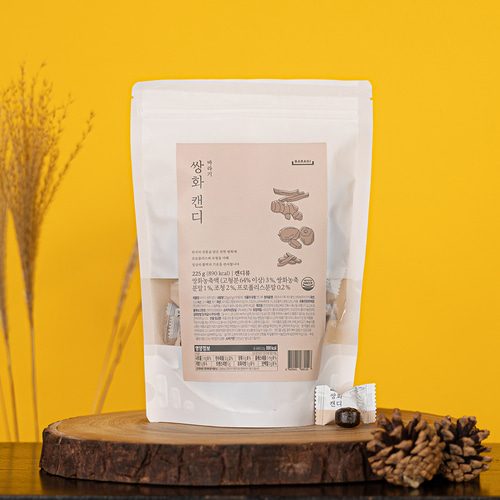
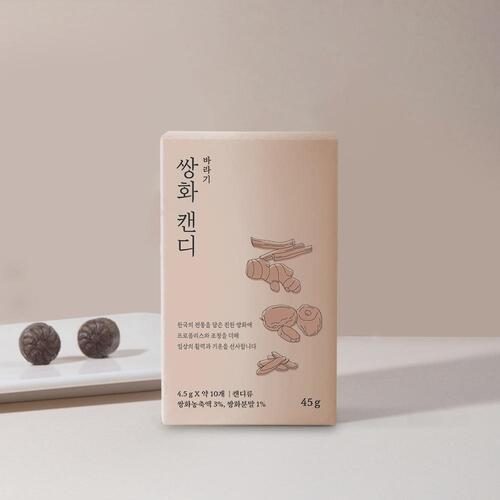
| Contents | 4.5 g × approx. 30 pieces · 135 g (tube) |
|---|---|
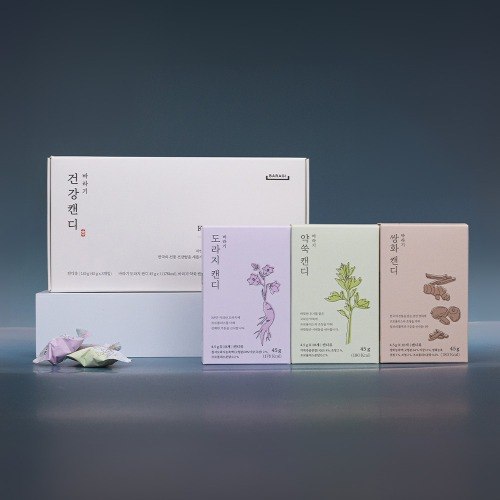
| Other sizes | Also available as a 45 g (10-piece) box and a 225 g (50-piece) pouch |
| Wrapper | Polypropylene (PP) |
| Outer pack | Paper tube, sized to fit a car cup holder |
| Storage | Store at room temperature, somewhere cool and ventilated. Reseal after opening. |
| Shelf life | Printed on the base of the pack |
| Allergen information | Made in a facility that also handles peanuts, soy, milk, pork and peach. |
Certifications
Also in this line
Enquire about this product
Trade terms, MOQ and lead time on request. We reply within one working day.
Contact